
How many restrooms does a county fair need?
Start with attendance, then add hours. A single-day fair with a few thousand walk-throughs runs differently than a four-day event with grandstand seating and a midway. OSHA 1926.51(c) sets a baseline of one toilet for every 20 workers on a job site, and fair organizers in Homestead, FL use that same ratio as a floor for public crowds, then scale up for peak hours around headline entertainment and food court rushes. If you are not sure where your event lands, How Many Porta Potties Do I Need walks through the math by headcount and duration.
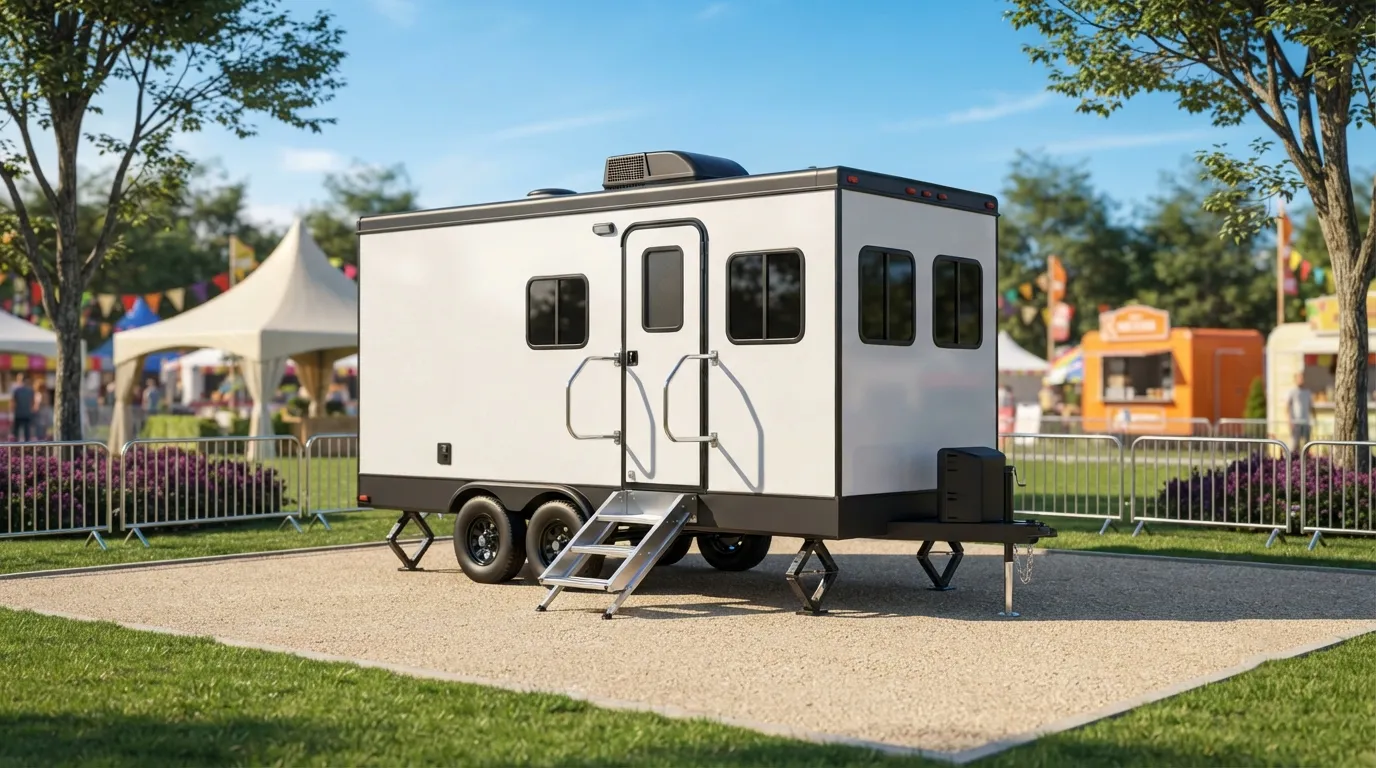
Most fairs mix standard portable toilets near the midway with at least one ADA accessible unit per cluster, since ADA Standards section 213.2 requires 5 percent of clustered single-user units to be accessible, minimum one. A standard unit runs about 44 by 48 inches on the ground and stands 92 inches tall, small enough to tuck between vendor booths without eating walkway space. For fairs with grandstands or a beer garden, a restroom trailer near the main stage cuts lines during intermissions. Vendor rows generate grease, so pair restrooms with a grease trap pumping plan if you're running food trucks on-site for multiple days.
What does a county fair restroom package cost?
A fair-sized event usually runs restrooms at the multi-day event rate rather than a single day or a full month, since most fairs run somewhere in between. Pricing below reflects standard measured bands; a full cost breakdown covers add-ons like extra service visits.
| unit | duration | typical price |
|---|---|---|
| standard | day | $150 |
| standard | event | $400 |
| standard | week | $200 |
| ada | day | $230 |
| trailer | event | $3,500 |
| delivery_fee | day | $150 |
Weekend fairs running Friday through Sunday often land closer to a flat weekend rate than a per-day multiple, since delivery and pickup happen once instead of three separate times. Ask about that when you request a quote, since fair layouts vary enough that a phone call beats guessing off a table. If your fair includes a beer tent or wine garden, a deluxe flushable unit near that section handles higher usage better than a standard tank. For fairs that stretch across a full week, monthly rental terms sometimes price out lower per day than booking event-only, worth checking against your actual fair calendar.
Where do restrooms go on a fairground?
Placement matters more at a fair than almost any other event type, because foot traffic clusters unevenly around the midway, grandstand, and food vendors. Group units near high-traffic zones but keep them off the main walking path so lines don't block foot traffic. Homestead Porta Pros needs roughly 60 feet of straight clearance behind a delivery truck to place a roll-off dumpster or trailer unit, so fairground load-in routes and truck access matter when you're mapping vendor rows. ADA Standards section 403.5.1 sets a minimum 36 inch clear route width to accessible units, and section 405.2 caps ramp slope at 1:12, both worth checking if your fairground has grass, gravel, or uneven ground near the accessible cluster.
Ground stability matters too. ADA Standards section 302.1 calls for stable, firm, slip-resistant surfaces, which rules out placing accessible units directly on soft turf without a mat or pad underneath. For multi-day fairs in Homestead, FL, plan a secondary trash and dumpster drop near the food court separate from the restroom cluster, since OSHA 1926.25 housekeeping standards call for keeping debris clear of work and public areas alike. If your fair runs into a temporary fence requirement around the grounds perimeter or a beer garden, that's a separate rental worth booking alongside restrooms so delivery trucks aren't fighting fence lines on setup day. Fairs near Leisure City, 3.3 miles north of Homestead, or Florida City, 3.9 miles southwest, often share vendors and layout crews, so coordinating both events' delivery windows in advance helps avoid truck conflicts.
Lighting matters after dark. OSHA 1926.56(a) sets minimum illumination levels for work areas, and fair organizers running evening hours should extend that thinking to restroom paths with a light tower if the grounds don't have fixed lighting already. Handwashing stations near food vendors round out a fair setup; see handwashing station rental for options that pair well with a restroom cluster.
How far in advance should I book fair restrooms?
Book as soon as your headcount estimate is solid, ideally weeks out for a multi-day fair. Weekend and event-rate units move fast during fair season. For emergency porta potty rental needs closer to the date, call directly. Homestead Porta Pros can often still place standard units within a few days.
Do fairground restrooms need to be ADA accessible?
Yes. ADA Standards section 213.2 requires at least 5 percent of clustered units be accessible, never fewer than one. A 60 inch turning circle per section 304.3.1 and a 32 inch clear door per section 404.2.3 apply to that unit.
Can I add handwashing stations near food vendors?
Yes, and it's worth doing. 29 CFR 1910.141(d)(2) requires soap and towels or a hand-drying device at washing facilities, not sanitizer alone. See portable sink rental for vendor-row options.
What about restrooms near the beer garden or wine tent?
A deluxe flushable unit or small restroom trailer handles higher use better than standard units. Place them close but off the main walkway to avoid backup during peak pours.
Does Homestead Porta Pros service fairs outside Homestead?
Yes. Coverage extends to Cutler Bay, 12.1 miles northeast, and Palmetto Bay, 15.8 miles northeast. Check service areas for full coverage.
Next step
Get a delivery date
Tell us the address, the dates and the headcount. We size the order and confirm the route.